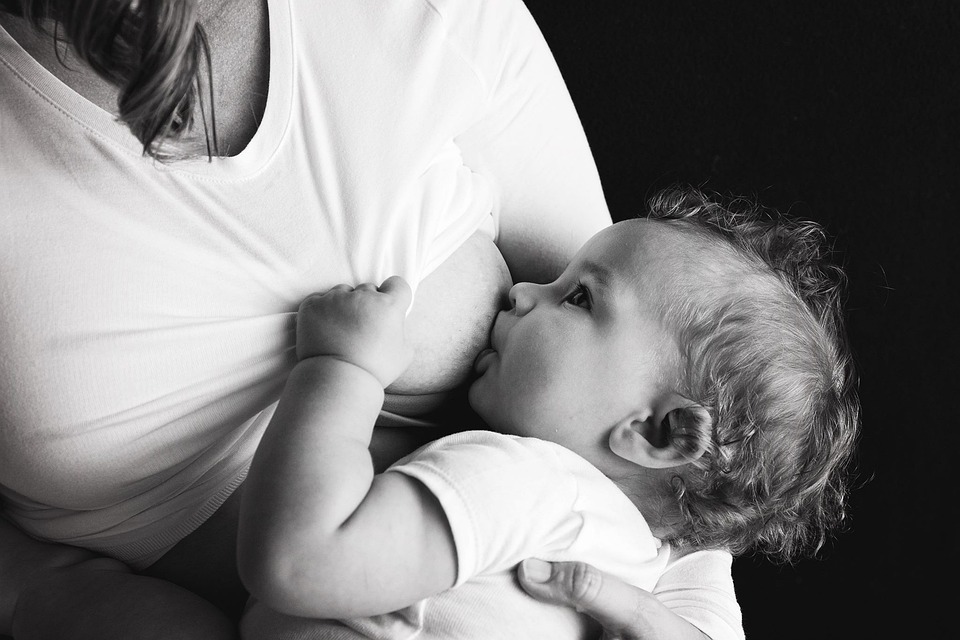
Best breastfeeding sites

Changing positions helps improve breast drainage
Changing positions throughout the day helps dry out the quadrants of your breasts and prevent blockages or poor drainage. The part of your chest where your baby’s chin is pointing receives the strongest pulling and growling during feeding. It is suggested to rotate your baby into a different position at each feeding, especially in the first week or two, as you and your sweetheart learn to breastfeed and you build confidence in your technique.
Whatever position you choose to feed, your baby should always be facing your baby’s knees, tummy, and chest. The baby’s arms should open wide and spread around your breast. Use several pillows to support your baby, arms, and back. Footrests are helpful and stop pressure on your back and muscle tension. Some mothers prefer to use a breastfeeding pillow, which is available for use with one or more babies. Family members and friends can make it easy to adjust the pads to provide support while nursing. Be sure to ask for all the help available. Also, be sure to keep a large container of fresh water on hand. Thus, you will usually have something to drink while you are breastfeeding.
Here are some recommended positions to do. You and your baby can finally find your favorite poses. At first, learn the cross-cradle, cradle, and football positions; These positions give you maximum control over your breast and also the baby’s head – the secret to proper posture.
football contract
This is a comfortable position to use immediately after a caesarean section as the baby is positioned away from your incision.
- Sit with pillows and a footstool if needed.
- Babe sitting on a pillow next to you.
- The baby’s body is turned toward you, so his knees, stomach, and chest are facing you.
- The baby’s arms are spread wide around your breast.
- When feeding on the right breast, you can hold your chest with your left hand in the “C” position, shaping the nipple and areola into a sandwich for the baby to know.
- Your right hand is around your baby’s neck, supporting the base of his/her head, and your arm supports his or her back, keeping the baby’s body close to you.
- Reverse your hands to feed the left breast.
Modified football contract
- Sit supported by pillows and a footstool, if necessary.
- The child lies on a pillow at your side.
- The baby’s body is turned towards you and wrapped around your body.
- The baby’s knees, stomach, and chest are facing your body.
- The baby’s arms are spread wide around your breast.
- The hand supports your breast and your baby’s head the same as in soccer. Opposite breast.
The cross cradle
This position is useful in the early days of breastfeeding because your breast, as well as the baby’s head and body, are well supported.
It has also been shown to be successful for premature babies who want more support and head control.
- Sit supported by pillows and a footstool, if desired.
- Babe lies on the front of your body supported by pillows.
- The baby’s knees, stomach, and chest are facing your body.
- The baby’s arms are spread wide around your breast.
- Baby’s eyes are looking at your face (and shoulder).
- When feeding on the right breast, you can hold the breast in your right hand in a “U” position, forming your breast and areola into a sandwich for the baby to grab.
- Your left hand will be around the baby’s neck, supporting the base of his/her head while your forearm will support his or her back, keeping the baby’s body close to you.
- Reverse your hands to feed the left breast.
Hold the cradle
This position is optional after you and baby have latched on without difficulties, and baby needs a little guidance from you.
- Sit down for supportive cushions and a footstool, if needed.
- The baby is placed sideways in front of your body supported on pillows with the baby’s knees, tummy, and chest facing your body.
- The baby’s arms are spread wide around your breast.
- Baby’s eyes are looking at your face (and shoulder).
- When feeding the right breast, you will hold the breast with your left hand in a “U” position, forming the breast and areola into a sandwich for the baby to latch on.
- Your right forearm supports the baby’s head and your hand supports the baby’s bottom. You’ll use your forearm to guide your baby to your breast (putting the baby’s head into the “crease” of your arm often puts the baby’s mouth off to the side and at the wrong angle to latch on to your breast).
- Reverse your hands to feed the left breast.
Traditional side lying
Lie completely on your side, knees bent, supported by pillows between your knees, behind your back, and under your head (body pillows are great support).
- The baby lies on his or her side with his tummy, knees, and chest facing your body, your lower arm tucked under your chest, and your upper arm across your chest.
- The baby’s face is looking at your breast and its mouth is near your nipple.
- The baby’s body is horizontal with respect to your body, with his or her feet pointing toward the bottom of the cot.
- If the baby’s mouth is under your nipple, place a closed towel or baby blanket under the baby’s head to reinforce the baby’s mouth until it reaches the nipple.
- You should place a tightly rolled towel or blanket behind your baby to prevent him from climbing onto his back.
- When right breast feeding, you will hold your breast with your left hand in a “C” position, forming your breast and areola into a sandwich for the baby to latch on.
- Your right arm will form an outline around your baby’s body on the bed and he will guide the baby to your breast.
- Turn onto your left side and reverse the breastfeeding positions for the left breast.
Upside down side lying
Follow the directions for traditional side lying, but your lower arm is raised and placed above your head along with your pillow.
- The baby lies on its side with its tummy, knees, and chest facing your body, its lower arm tucked under your chest, and the baby’s upper arm is on top of your chest.
- The baby’s face looks at your breast at the level of his mouth with your nipple.
- Pip’s body is horizontal to your body and his feet are pointing toward the top of the bed.
- If the baby’s mouth is below your breast, place a folded towel or baby blanket under your baby’s head.
- You can place a tightly rolled towel or baby blanket behind your baby to prevent him from climbing onto his back.
- When feeding on the right breast, you’ll hold your breast and your left hand in a “C” position, shaping the breast and areola into a sandwich for your baby to know when your lower arm is above and below your pillow.
- This is a useful position for emptying the upper quadrants of your breast and should be very comfortable once you’ve had a C-section if your belly is sore and swollen.
- You may want to make it easier for your baby to get into this position and keep the baby latched on throughout the feeding period.
- Turn onto your left side and cross your hands to breastfeed the left breast.
prone position
This position will be useful if you feel that the flow of milk is too fast or too strong for your baby. Gravity slows the current.
- Lie on your back with your knees bent, also use pillows and support your head.
- The baby lies on your tummy and tries to go down to your breast; The arms are spread wide around your breast.
- An alternative is to lay your baby on his stomach, lying on pillows at your side with his/her face looking down at your breast and your baby’s arms spread wide around your chest.
visit: Breast Journal Learn more about breastfeeding